Paul Russell · 2 September 2026
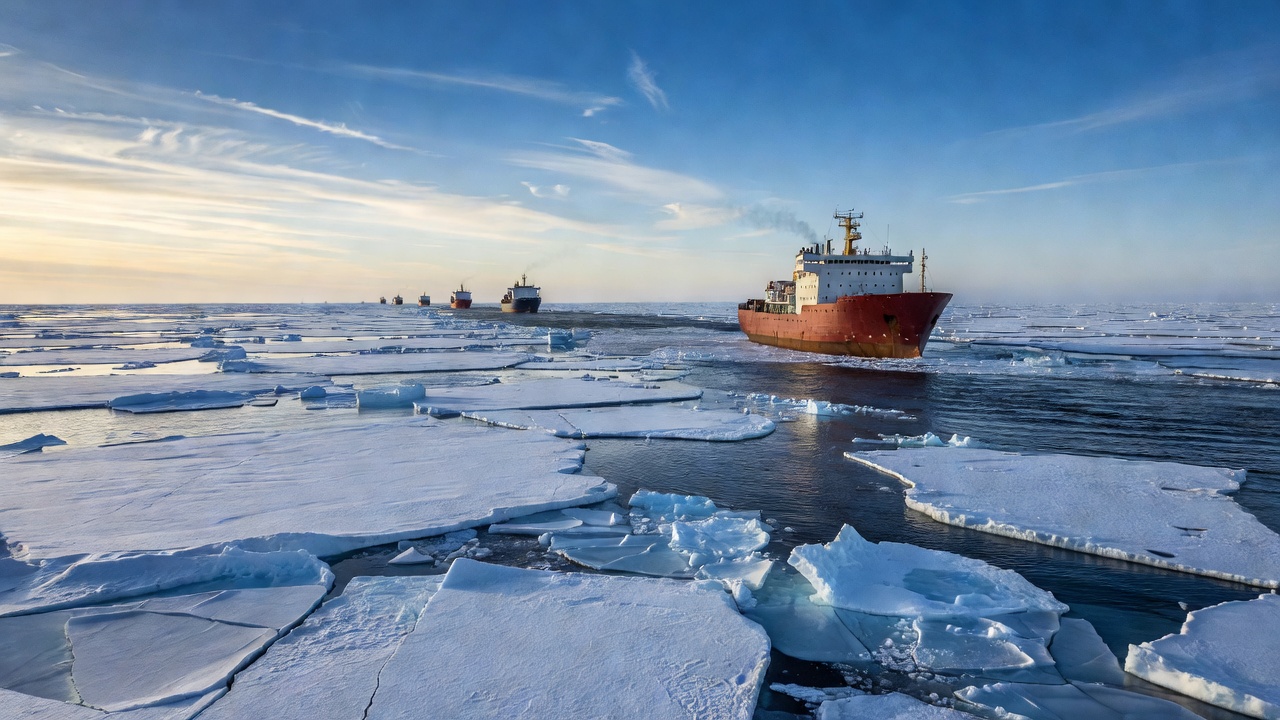
Recent satellite observations from multiple polar research stations confirm that Arctic sea ice extent has declined to unprecedented levels this season. Shipping lanes through the Northern Sea Route and Northwest Passage have become navigable weeks ahead of the long-term average. Data compiled by international monitoring networks show a reduction of more than 1.2 million square kilometers compared with the 1981-2010 baseline.
Navigation Windows and Operational Data
Commercial vessels began transiting the routes in early July, shortening typical transit times between Europe and Asia by up to twelve days. Ice-class carriers report reduced fuel consumption and lower operational costs. Researchers tracking vessel movements note a 35 percent increase in cargo tonnage compared with the same period last year. Continuous buoy and drone surveys indicate that first-year ice now dominates, with multi-year ice limited to isolated pockets north of 80 degrees latitude.
Port authorities in Murmansk and Nome have extended operating seasons and upgraded icebreaker support. Real-time modeling from European and North American agencies predicts at least four additional weeks of open water before refreezing begins. These changes affect supply chains for energy and mineral resources while prompting updated safety protocols for vessels lacking reinforced hulls.
Environmental Monitoring and Research Priorities
Marine biologists are documenting shifts in migratory patterns of bowhead whales and increased shipping noise in previously quiet basins. Sediment cores collected near the new routes reveal accelerated coastal erosion linked to longer open-water periods. Atmospheric measurements show elevated black-carbon deposition on remaining ice, further accelerating melt rates. Long-term programs at Svalbard and Barrow emphasize the need for sustained autonomous sensor arrays to quantify ecosystem responses.
International agreements now require mandatory reporting of vessel positions and emissions within designated sensitive zones. Funding agencies have prioritized grants for studies examining potential invasive species introduction and underwater acoustic impacts. Continued observation remains essential to distinguish natural variability from anthropogenic forcing in the rapidly changing Arctic system.