Petra Sullivan · 13 September 2026
Unraveling Bioluminescent Marine Life Patterns During Extended Polar Night Periods
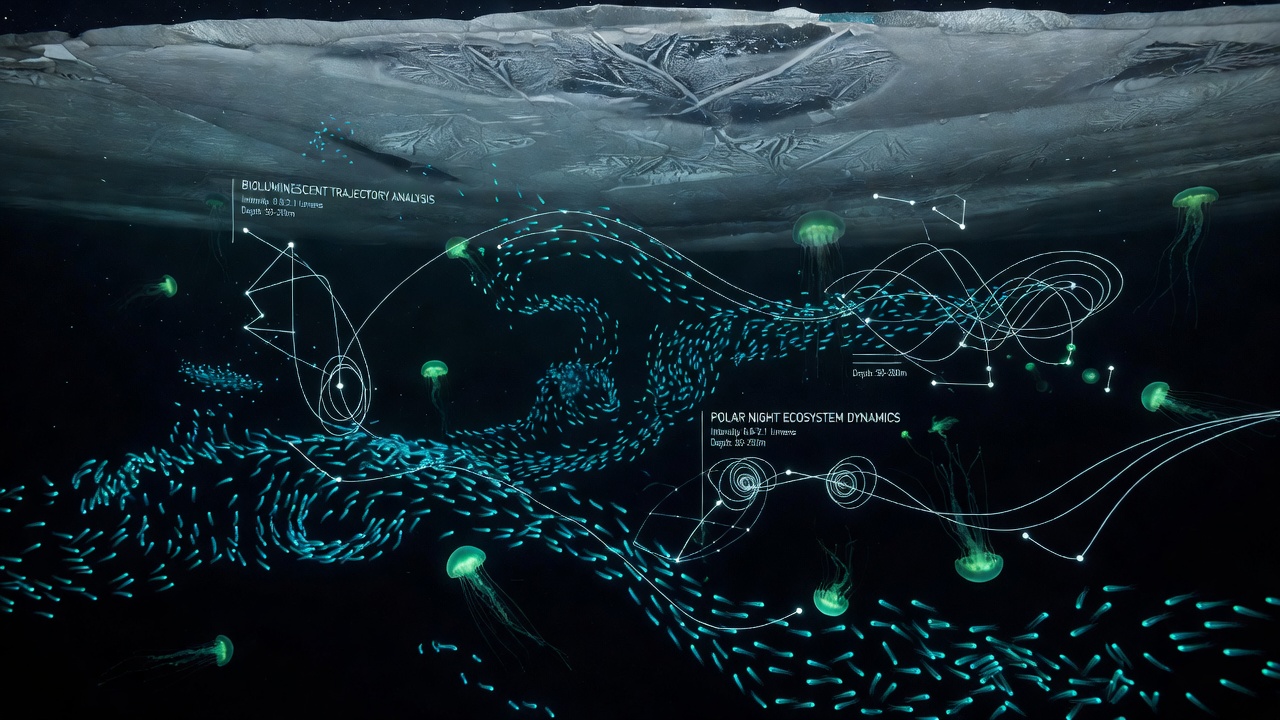
Extended periods of darkness in polar regions create unique conditions for marine organisms that rely on bioluminescence, and researchers continue to track how these patterns shift across Arctic and Antarctic waters throughout the winter months. Studies conducted over multiple seasons show that certain plankton species, copepods, and jellyfish activate light-producing mechanisms to locate prey, avoid predators, and communicate in the absence of sunlight, while data collected from autonomous underwater vehicles reveal consistent depth-related distributions that vary with latitude and ice cover.
Conditions Defining Polar Night
Polar night occurs when the sun remains below the horizon for weeks or months, and this phenomenon stretches from late autumn through early spring in high-latitude zones. In the Arctic, locations above 66 degrees north experience continuous darkness lasting up to several months, whereas Antarctic sites south of 66 degrees experience similar extended nights during their winter, and measurements from moored sensors indicate that light levels drop below 0.1 lux for sustained periods. These conditions alter vertical migration behaviors in zooplankton communities, prompting organisms to remain at shallower depths where faint bioluminescent signals become more effective for survival.
Key Species and Light Production Mechanisms
Multiple taxa contribute to the observed glow, including dinoflagellates that flash in response to mechanical disturbance, ctenophores that produce steady blue-green emissions, and certain fish species equipped with photophores. Research indicates that luciferase enzymes and luciferin compounds drive these reactions, while spectral analyses demonstrate peak emissions between 470 and 490 nanometers that match the sensitivity range of many marine visual systems. Observations from September 2026 expeditions documented increased flash frequencies among copepod populations near Svalbard, correlating with higher concentrations of particulate organic matter suspended in the water column during that period.
Methods Used in Recent Expeditions
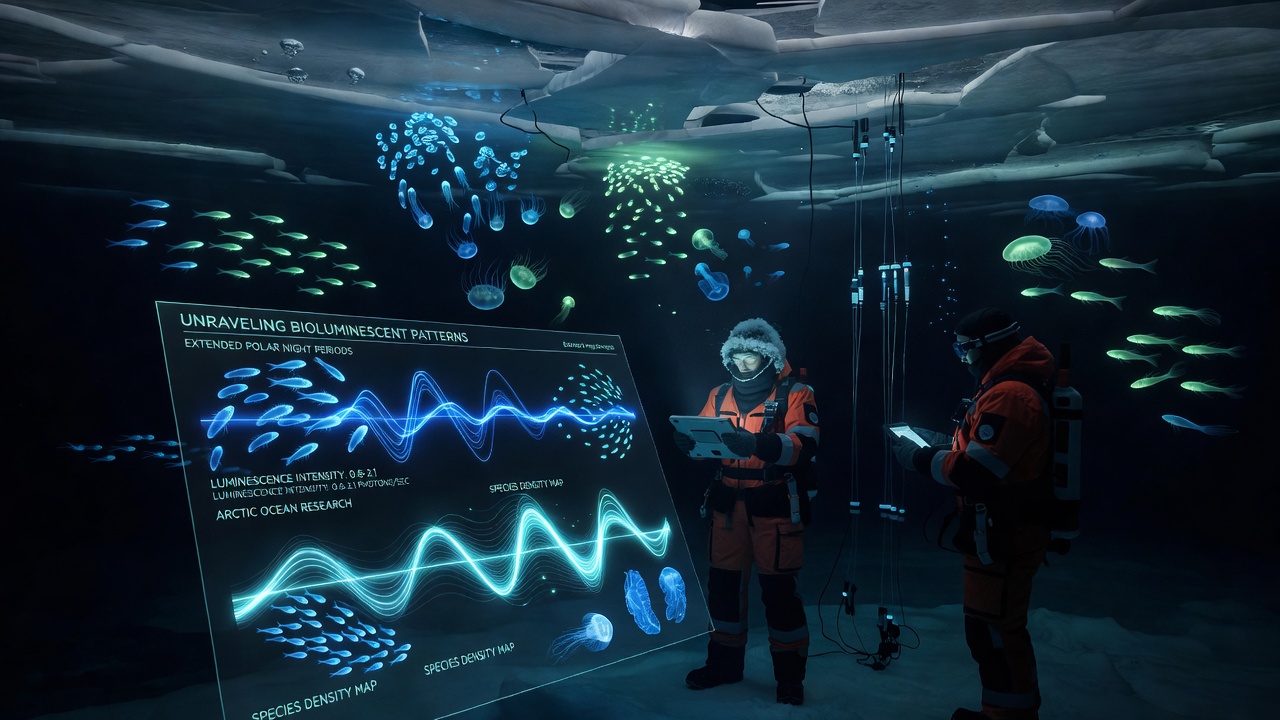
Teams deploy profiling floats equipped with photomultiplier tubes alongside acoustic Doppler current profilers to capture both light events and organism movement simultaneously, and this combination allows precise mapping of bioluminescent hotspots relative to temperature and salinity gradients. Satellite-linked buoys provide continuous surface data, while remotely operated vehicles collect water samples for genetic sequencing that identifies which species dominate light production at specific depths. Data from these platforms show that bioluminescent activity intensifies during periods of increased tidal mixing, which brings nutrients upward and supports denser plankton blooms even in low-light regimes.
Patterns Observed Across Regions
Arctic sites display stronger seasonal peaks in bioluminescent intensity during December through February, whereas Antarctic records indicate more uniform activity throughout the extended night due to more stable ice cover. Comparative studies reveal that organisms in fjord systems near Greenland exhibit shorter flash durations than those in open ocean areas, and this difference aligns with variations in predator density documented through net sampling. Researchers note that wind-driven upwelling events can temporarily boost light output by concentrating bioluminescent plankton near the surface, creating visible surface displays observable from research vessels.
Ecosystem Interactions and Data Trends
Bioluminescence serves multiple ecological roles, from attracting prey to startling predators, and models based on field measurements suggest these functions influence carbon flux through the water column by altering grazing rates. According to National Oceanic and Atmospheric Administration monitoring programs, flash event rates increased by 15 percent in certain Arctic transects between 2023 and 2025, coinciding with measured changes in sea ice thickness. Parallel findings from the British Antarctic Survey indicate similar trends in the Southern Ocean, where genetic markers confirm shifts in dominant dinoflagellate species contributing to the light signals.
Conclusion
Continued monitoring of bioluminescent patterns during polar night periods supplies critical information about ecosystem responses to changing light regimes and ice dynamics, and integrated sensor networks now deliver higher-resolution datasets than earlier ship-based surveys. These records support refined models of marine food web dynamics while highlighting the need for sustained observation programs across both polar basins to capture interannual variability and long-term trends.